Games as Experiences
We live in a time where we have access to a true embarrassment of riches when it comes to media access. By that I mean, we have truly enormous number of movies, TV shows and video games are accessible to us across digital store fronts, physical media stores (at least, while they still exist at all), and thrift stores. If anything, the biggest issue many of us face when sitting down to watch a movie or play a game is choice paralysis. When you’ve got a collection of cartridges on your shelf to pick between, it’s a bit of a difference to your thousand-strong Steam library or the like. In a bad way for options; in a good way for choice.
On your PC you can play arcade games from 1972 or brand new AAA video games from this year. Your console is similar. Hell, on your phone you can browse to a web site that emulates full vintage computers… if you can stomach typing commands into your virtual Atari 400 on an iPhone keyboard. (Though, let’s face it, a smartphone keyboard is probably still better than the awful membrane keyboards on that thing.)
There is a down side of this I kept thinking about as I was musing on the 20th anniversary of the Xbox 360. (If you just felt a twinge in your lower back, feel free to adjust your chair cushion for better lumbar support before continuing to read.)
It Plays Everything
Most people I know these days have a single device they do the overwhelming majority of their gaming on. It’s often either a Playstation 5, a Switch, or a computer which exists as a life-support system for Steam.
Whether it’s playing re-releases of old games, remasters of old games, or sometimes even playing a new game (shocking, I know), most people found their groove and stick to it. There’s a few of us weirdos around who have a ton of devices and displays from 8-bit computers with CRT monitors to SteamDecks to generic desktop PCs, but we’re increasingly the rarity. It makes sense why, of course. Cost of living, most of us living in smaller apartments with less room than ever… it makes sense, unless you’re a huge games history nerd or retro gamer, to just stick with one modern thing that does “enough” of what you want.
This is a relatively new phenomenon though. I don’t think it’s possible to pin down precisely when this happened, because it happened slowly, but the Xbox and Xbox 360 from Microsoft was certainly a component in it. Part of why I got a 360 specifically within a short period after its launch was that it not only played a lot of then-modern console exclusive games, but many ports of PC games that were increasingly good.
Three-Way Battle
Part of this is technical. By this point, most games were built with OpenGL or DirectX as their main graphics system, and the line between doing Xbox development and Windows PC development was getting thinner and thinner even at that point. Then there’s the technical aspect.
Console VS Computer was a bit of an arms race. Earlier, a three-way one - console VS computer VS arcade cabinet. Early on, you couldn’t imagine selling the absurdly powerful systems required to render fancy game graphics to a consumer, so the very best and prettiest games were always in the arcades. Consoles were second-best - they may have been on paper quite a bit slower than most computers, but where they shined was their ability to move first sprites and then polygons with hardware acceleration much faster than the early IBM PCs and the like.
Barring the odd exception (the Amiga springs to mind) this remained the case for a while. But even once computers sped up and very fast 3D acceleration cards became a thing. At that point you get this odd kind of arms race. PC might be faster, but not everyone -had- a fast PC. Consoles were standardised in terms of hardware, OS and input, and piracy was less of a concern there too.
I’m simplifying decades of history of course, but in short: each had their place. Gamepads and the 6-foot experience were ideal for certain games, especially when playing couch multiplayer with your friends, where-as other games (often cerebral strategy & simulation titles) were best suited to desktop computers.
I remember going over to a friend’s house once, to find the friend playing a fast-paced platformers on their Sega console, while their dad was in his study, re-enacting the Battle of Whereverthefuck in whatever SSI’s latest war game simulator was, as my friend’s sister sat on a nearby chair playing Pokemon on their Gameboy.
(In this example from my memory nobody was out at an arcade at the time, but if you wanted to play an 8 person racing game or the latest side-scrolling fighting game, the point is you’d be out at your local arcade to do that.)
Each type of game had its place.
Line-blurring
These days, even before you get into emulation or the like, people often have gamepads on their PCs, flight or steering setups for their consoles, and arcades are gone, replaced by infantilised versions of casinos, offering you trinket prizes for completing incredibly simple side-show style games. That and the odd Dance Dance Revolution game which still might see some use.
This is good for us in many ways. You can pick the gaming setup that works best for you, whether that’s portable, couch-based or sitting at a desk, and still get access to a gaming library that’s hugely similar to what’s available on the other two - something which only looks to be getting more the case as Valve is now announcing and even more polished hybrid unit, the Steam Machine.
However, there is something this has done which I think is a loss to us, and it involves not the hardware or the interfaces, but the social experience of playing games.
Games Culture
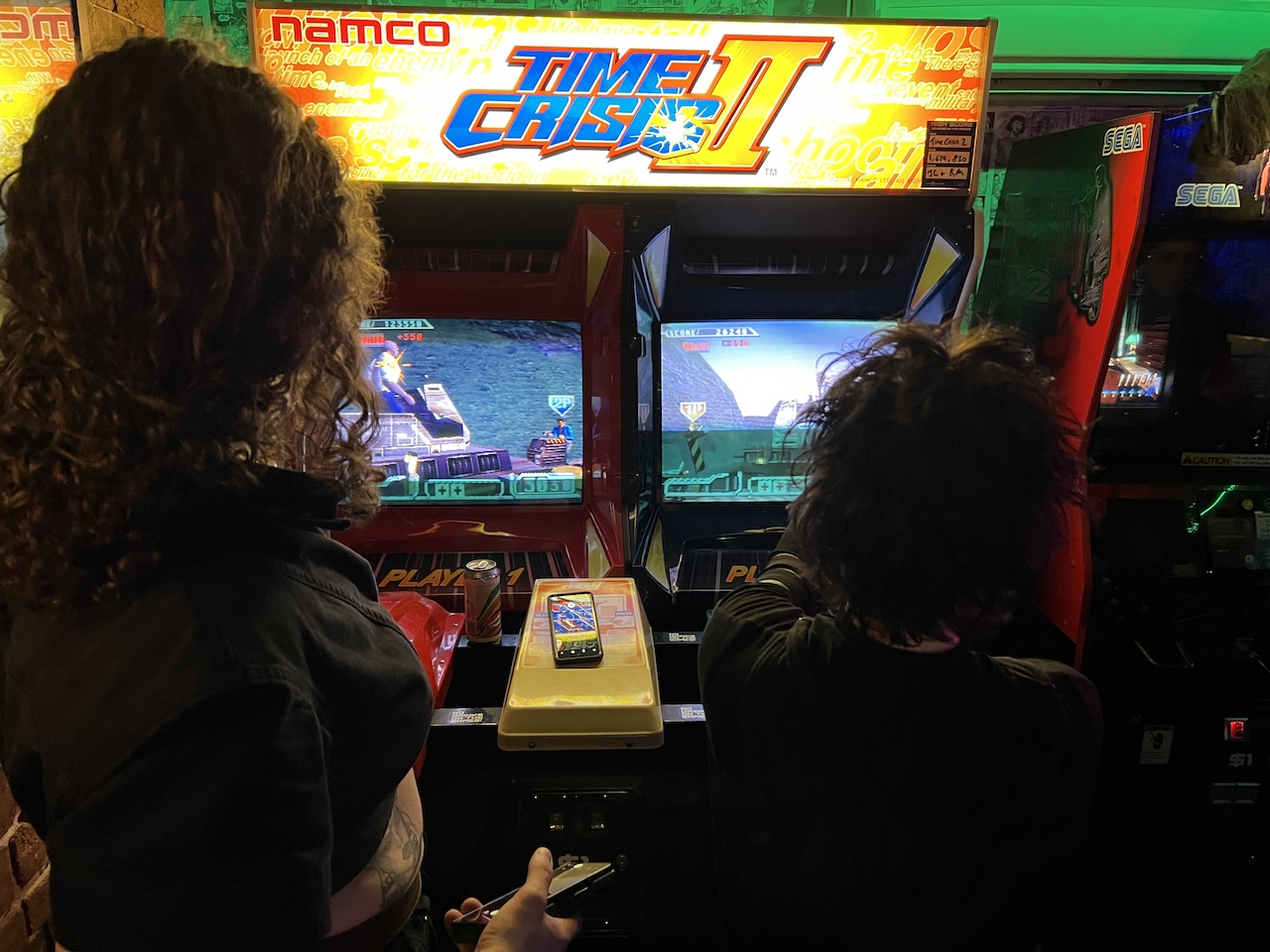
You walk into the arcade, nodding in greeting at the duo who are always playing whatever the latest horror arcade games are. You pass several people lining up to play in an ad-hoc Street Fighter or Mortal Kombat tournament. You notice five people cheering or cursing as one of them makes it across the finish line from their Daytona USA game.
You are on a train, frowning as you turn the page of a thick manual. It’s explaining how to use the AN/BQQ-5 sensor suite aboard the nuclear submarine you’re been commanding for nearly two weeks now. You’re getting better - but last night you got taken down by a Russian Akula-class boat, and you’re sure that if you had a better grasp on reading the output from your different sonar arrays, you’d do better.
You sit on your friend’s couch. She is gripping her Xbox controller, white-knuckled, sneaking around a falling-down mansion with a film camera trying to photograph ghosts. Failing miserable and dying, you both scream in shock and she passes the controller to you. It’s your turn to try not to soil yourself.
You open your leather-bound book and find the page from last week. Ah! there it is. In front of you sits a pencil sketch mapping out a dungeon you’ve been exploring. Last you left off, you were down by the underground river, having just dispatched some goblins and looted them for their vittles and bent copper coins. Checking your map, you see a big squiggly question mark from last session. You remember that you wanted to explore west down the river, to see what lies there. You pull out your pencil, boot up the game, and head towards where you jotted down that question mark.
Three sheets to the wind, you and your friends have moved from the dining table to the lounge room, and now take turns playing Tennis on your Wii. At one point, strap not secured properly, one of the players loses their virtual bat, sending the Wii-mote flying across the room and knocking over a glass half-full of wine. Everyone but the host howls with laughter.
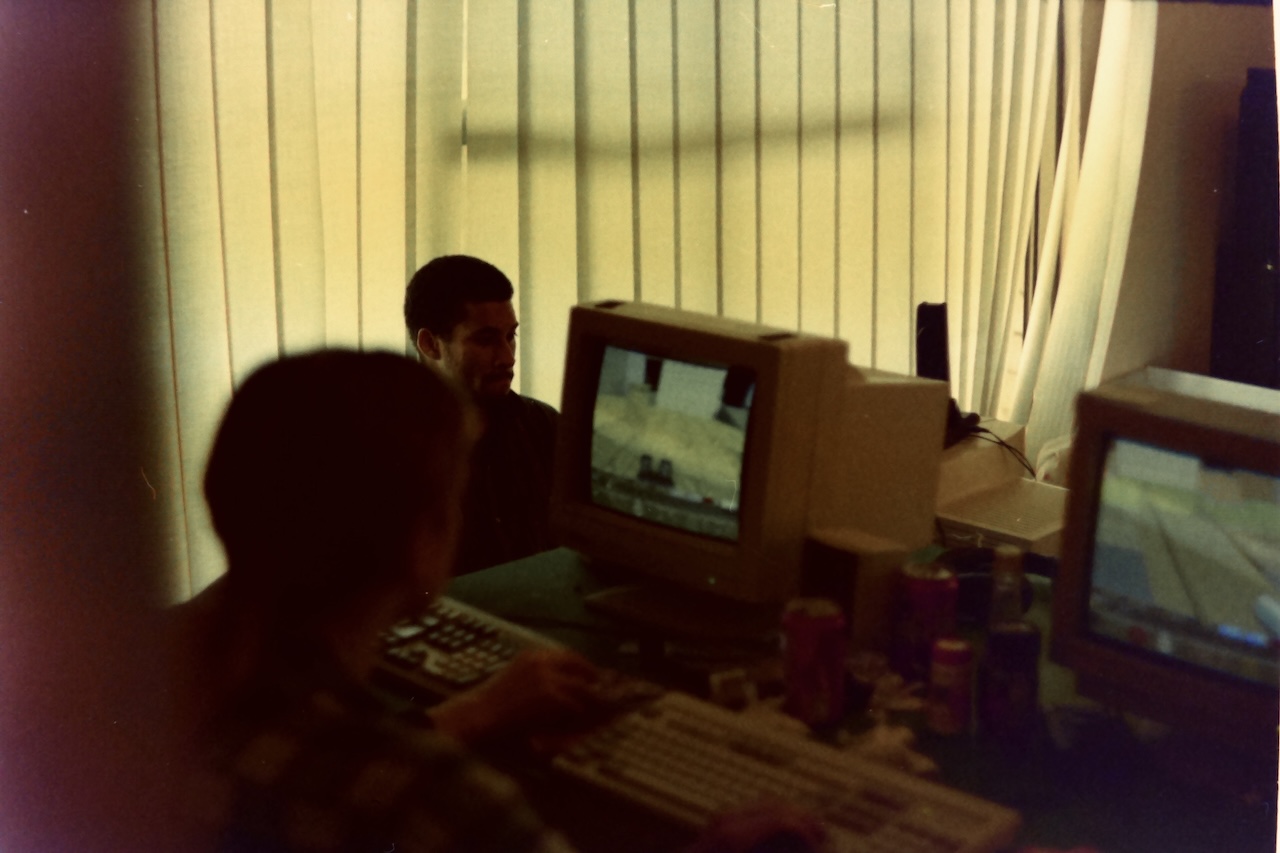
You sit at a desk, your mouse in one hand and your fingers of the other poised over the WASD keys of your keyboard. “Wait,” someone at a desk beside you says. “Are you down by the back entrance?”
“No, I told you I was going to set some mines near the front entrance.”
“Are any of you down there? I just saw someone move.”
“Fuck, someone took out my turret,” says another member of your team.
There’s a melodramatic scream. “Spy! He just stabbed me in the back. Damnit.”
“Quick, let’s go down there before he gets the flag.”
“I’m dead. Anyone want a coffee?” says the stabbed-in-the-back friend, standing up to head for the kitchen and turn on the coffee machine.
“We should order pizza soon.”
“What time is it?”
Experiences
We can play most any game on any system, but games are not just code and art assets. They are experiences, and how we play them - the social environment, the setting, and how we choose to engage with them, is a massive factor in how we enjoy them.
Most of the experiences I mentioned above are still accessible. It may be harder to find a fully stocked arcade near where you live now, but they do exist. You could invite friends out to them as a once-off or even regularly. You could sit down and read the manuals of games where part of the fun is experiencing that. You could play couch co-op games again, or even just pass the controller while playing some puzzle or horror game.
It’s good that we can play so many games on so many systems so easily - but it’s up to us to remember that so much of the experience of games can be made or broken, or improved or expanded, by how we play it, what we bring to it, and how we involve our friends. (Or don’t.)
Oh, and turn off your damn phone when you play.