In Memorium: My 2026 Doing Game Dev
The day after I write this I’m starting work on Thimbleweed Park 2, which is going to dominate a lot of my time (obviously). That has me thinking about the work I’ve done this year, the games I’ve released, and what my plans are for 2027.
This year has been a big one. I released three video games. First, my little virtual toy set, Second Hand Computer. Then Dungeons of Freeport, my play-once-a-day extraction roguelike. And finally, Deck & Conn, my long-in-development turn based military space ship game.
It sounds like a lot of work, and, frankly, it was, but the latter two of these were still games that I began in years past, so they represent the culmination of years of work rather than one truly insane year working 25 hours every day or something.
In general, I’m really happy with how they all went, but as that chapter of my existence and life as a game developer wraps up, I’m left thinking about what comes next. Outside of my time working on TWP2, while I am going to have some time to work on things (and plan to spend a bunch of that continuing work on content updates for Deck & Conn), well… I need to talk about something.
Let’s face it: 2026 hasn’t been a normal year for game dev. Or, to put it another way, it may well be something akin to the “last normal year”, for a while.
2026: The Year of Slop
The number of games being released on Steam (and other digital storefronts) has been increasing for years. This is, generally, a good thing. More games, especially more indie games, is better! The barrier for entry is dropping, accessibility of tools and assets are improving, and as a result more and more people are turning their hand to game development.
Except that for some time now (and 2026 feels like when it truly took off) AI Slop games have been absolutely firehosed into existence on Steam. At Steam NEXTFest, a regular pre-release game demo festival, the number of games being shown is increasing at an almost literally exponential rate.
No matter what you think of the ethics or practice of using LLMs as part of the game development process, it’s clear that the amount of low-quality slop on digital storefronts is becoming a major problem. It was already getting tough to stand out amongst the myriad other indies, but a constant conversation subject on indie game dev groups I’m a part of has become: how do we cut through this crap and get our games seen?
Order 66
Then there’s the issue of clones. Even moderately successful games often find themselves confronted with numerous poor AI-generated clones these days, sometimes before they even release their full game. An AI reverse-engineered demo or even just a trailer can sometimes be enough to produce a rudimentary clone of a game, especially high-concept games that are more about a unique idea than anything else.
At an indie dev marketing group I’m a part of, one of our number is about to release a really cool new game, and is being stuck with uncomfortable questions.
Their game is one you can explain simply, get within seconds of seeing even part of a trailer, and what’s most unique about it is that concept, rather than some specific aspect of its execution.
Their questions include:
- Is it worth keeping a demo up? Will that increase the chance of an AI clone coming out, even before their game fully launches?
- Is it worth pushing the release up, even if it means shipping with less content, if it means being the First One Out with this concept?
- What will they do if or when someone does produce a dodgy AI clone of their game?
These are unpleasant conversations that fundamentally harm the game, its players, and the devs. If you release the game early, with less content, fewer people may like the game. A series of negative reviews at the start can mean the difference between a game getting the momentum to keep going, or effectively being algorithmically hidden before it even has a chance to start out.
And here’s the thing: this is all deeply dispiriting me.
My Next Game?
Last year I began prototyping what was going to be my next game after Deck & Conn. It’s a chill tropical island survival crafting game, essentially designed for myself to give me a laid back virtual holiday when I couldn’t afford the money or the time to take a real one.
I got quite a ways into it. Probably about 70% done, including spending quite a bit of money on the art assets for the game. It’s even got a Steam App ID, so I have been testing it on my Steam Deck and Steam Machine. I was originally thinking about getting it out by the end of this year or early next.
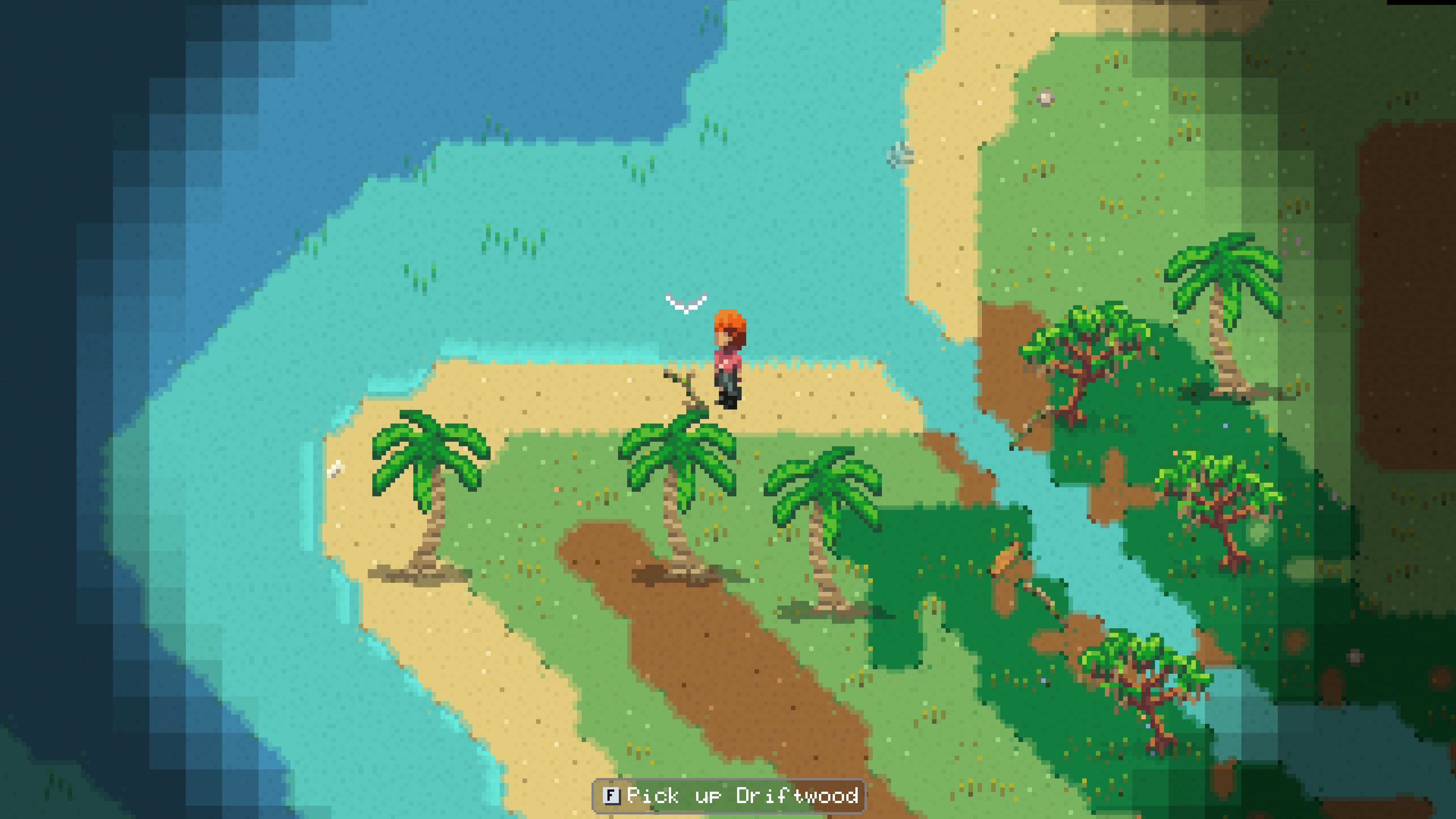
I haven’t worked on it in two months, despite having the time to. Hell, I’ve barely posted any screen shots and haven’t written blog posts about it. This is a far cry from the 15 or so blog posts about Deck & Conn’s development.
Like a lot of developers, the sheer number of people seeing a post about a game and going “oh I can do that in 5 minutes with Claude!” and producing even the Temu version of a project I’ve sweated over for years has meant that I am being less transparent about my design and development process. So much so that between that and the utter deluge of crap dominating the store fronts, I’m not even sure I want to release it.
This will pass, of course, but the simple fact is that releasing anything now just seems depressing to me. It’s not just about AI slop, either. The entirely understandable push-back against AI has seen legit developers and artist friends of mine absolutely beset by accusations of using AI, to the point where it like releasing art of any form has almost stopped being fun.
The Problems of the Past
The simple fact is we are in a state of flux for game development. The overwhelming majority of the excellent developers I have worked with the past decade are out of work. Studios have shuttered, games are being cancelled sometimes even after they’re completed, and the sheer amount of garbage being produce far outweighs the well-designed indie games that have stood out from the crowd in years past.
In a lot of ways, part of it reminds me of the Great Video Game Crash of 1983. Despite the urban legend that it was all because of the release of the ET Game, there were actually numerous factors resulting in the Atari-related crash. The one that seems most relevant here is this:
The number of games was dramatically increasing, and the quality was decreasing. At a certain point, if everything you see or buy turns out to be dogshit, people who play games but perhaps aren’t totally obsessed with the medium will, at a certain point, just stop bothering. If you can’t remember when you last loved or even really liked a random game you bought, why bother risking it?
It’s a familiar sounding problem. On the one hand, you can lay a lot of this on the door of the “AI Companies” producing LLMs that let you make entire video games without having any clue what you’re doing. But even if you’re able to ignore that part for a moment, the issue is fundamentally a drop in average quality and a dramatic reduction of ability to sift out the wheat from the chaff.
Add in the near-death of video games criticism, and at this point even quite a decent indie game has essentially two avenues to making enough sales for the developer to support themselves: either you luck out and get a streamer with a big following to promote your project, or you sign with an indie publisher whose follower-base and preferred genre gives you a built-in audience, at the cost of the publisher taking their pound of flesh. And either way, you just hope people correctly figure out which game is yours and which is one of the 7 terrible clones.
The Solution Isn’t Simple
There’s a good argument that a lot of the responsibility on solving the visibility part of this problem is on the platform holder. Or, more specifically, on Steam itself. Yes, there’s Itch.io and GoG and Humble and Epic (though I think we can all agree that the AI-lovers at Epic sure aren’t likely to help here)… but just what they can do, anyway?
On the one hand, AI disclosure, with the ability to filter out AI games is something some folks are asking for. But not only does that rely on disclosure (its own problem), but the fact is that this is far from a solution.
What constitutes AI use that even SHOULD be disclosed? AI generated art assets? Certainly. AI generated code? AI help for fixing some stubborn bugs? Looking up problems on more or less any search engine? (Given they’re all producing AI farts as results now anyway.) What about local LLMs trained from legally obtained source code? What about small local LLMs used for limited code auto-completion? The latter has been built into the JetBrains IDEs for ages, with no real ability to turn them off without deep-sixing almost all your autocomplete functionality.
Then I got the other jarring realisation: a good number of the gamers I don’t casually know don’t seem to know or even truly care about much AI use. They just want their games to not suck.
Twenty Twenty-Seven
And so here I am. Half finished my next game, staring into the Abyss that is the slop-filled store fronts and being in the privileged position of having work that means I’m not obliged to go finish and push this game out. At least, not for a while.
So will I keep working on it, in my spare time? Slowly tinker away at it, hoping some fixes arrive for the nightmare that is indie game releasing in the modern age?
Right now, it’s been several months since I last touched it, and I think I’ll just keep it shelved for a while. The indie dev world is just so depressing right now that it’s hard to get excited to keep working on it. When I feel the urge, I might go back to it, but for now, it’s going to gather digital dust on my dev server.
Depressingly? It feels good to type these words. To take some time off from anything other than working on a project I am genuinely excited for with a team of very talented people, where all I have to worry about is doing my job on the team as well as I possibly can.