Returning to San Andreas
Well, after re-visiting GTA Vice City and getting a surprising amount of the way through it before running into missions that were too tough, there was really only one place to go: the great state of San Andreas. Going back to Vice City was interesting, because for all that its vibes remain immaculate, its incredibly fast turn-around time and original intent as an expansion for GTA III very much show through.
The difficulty of the missions yo-yo’d, and even the story took strange turns that felt like certain phone calls or cut scenes were inexplicably dropped on the floor (because they were).
As I re-played the game, I also went back and read contemporary reviews. Many of them are a full 5/5 or 10/10, or perhaps a point under that if someone was being extra critical. I don’t think these reviews are “too high” per se, even if the game now, nearly 25 years later, is not quite the enjoyable experience those reviews would make out. These reviews reflect the important part: that in terms of world, gameplay and vibes, nobody had ever seen anything like Vice City when it came out.
When you play old games, it’s important to remember the context in which they came out - and if you read reviews from when it came out, it’s important to remember the context from which they were written.
That the game remains hugely playable and enormously fun despite some of its rough edges is a credit to it for sure. So, the question as I re-played San Andreas became: given the way parts of Vice City’s gameplay and narrative aged poorly, how would San Andreas stand up, given it built on what came before and had a full two years (gasp) of development time?
Notes: as with my Vice City revisit, this is not so much a review as a collection of thoughts that came to me as I re-played the game, especially as they relate to the rest of the series - what’s before and what’s to come. Oh, and, finally, because of the quality of life improvements generally, for this I played the Definitive Edition remaster.
Story
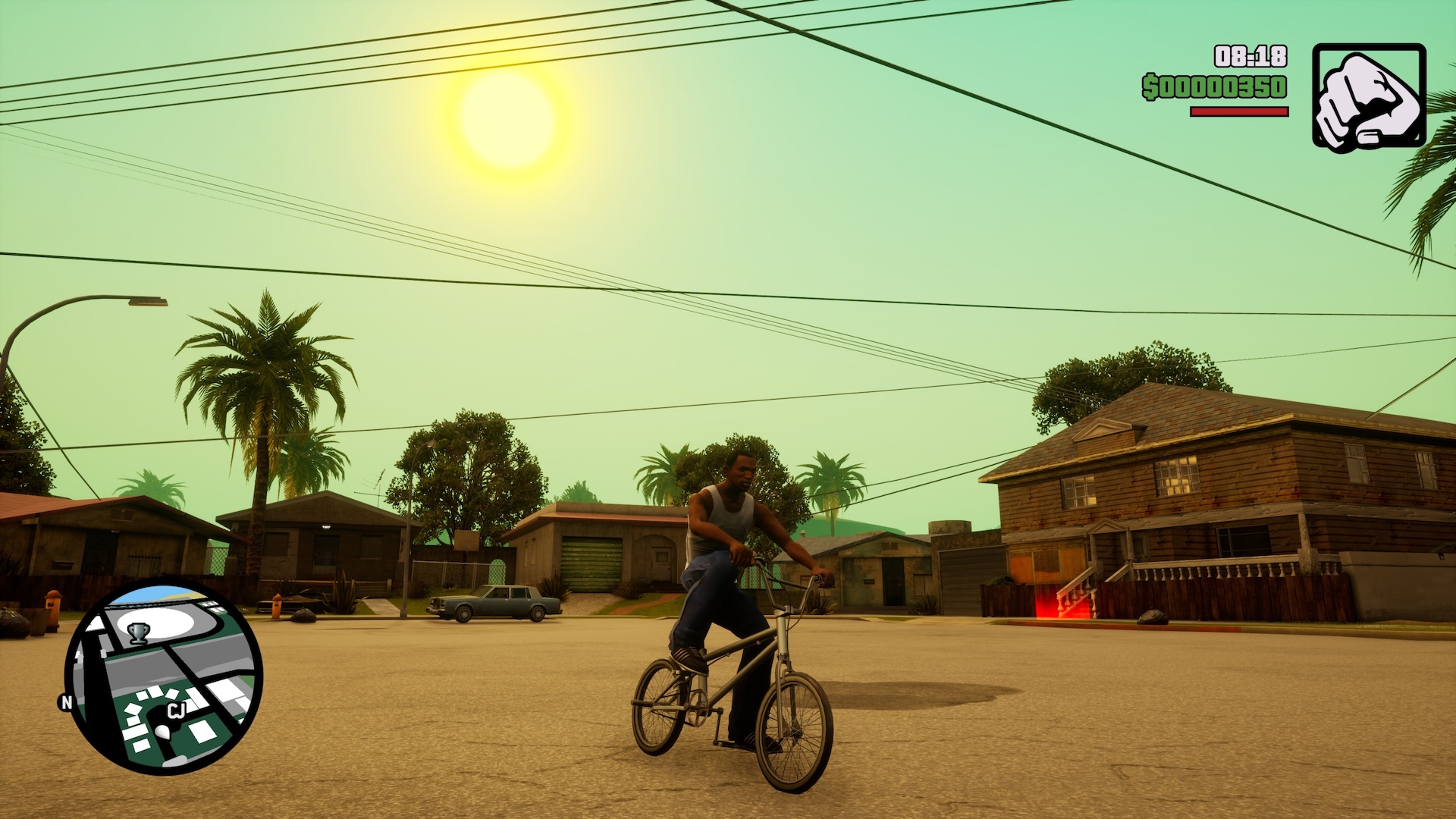
San Andreas instantly begins in a more grounded way than Vice City ever hit. Carl, who has for reasons we find out later been living on the West Coast for the past five years, is travelling back to face his family - and bury his mother. From there, he deals with the social aftermath of the crack cocaine epidemic, rivalries between street gangs, and corrupt cops.
It’s a huge contrast to the mob power fantasy of Vice City, where Tommy Vercetti is quickly attending fancy parties on yachts and taking over high level rackets, becoming the richest crime boss in town.
But the thing is, that more grounded story doesn’t last. After the game’s first act, Deus Ex Policia declare him persona non grata in Los Santos (Los Angeles) and send him out into the sticks, firstly to a small town. Doing as he’s told and meeting more random people, Carl eventually ends up in San Fierro (San Francisco). The structure of the game more or less continues in that way, with each section ending a new area opening up. After San Fierro it’s a series of missions out in the desert, before making it to Las Venturas (Las Vegas) and then finally returning to Los Santos to defeat the corrupt cops and save his families (both blood and his street gangs).
What’s interesting re-visiting this is how with limited overlap of characters, the stories told in each of these areas feels distinct. They could also be their own game, and that it’s CJ from Los Santos doing them almost feels academic.
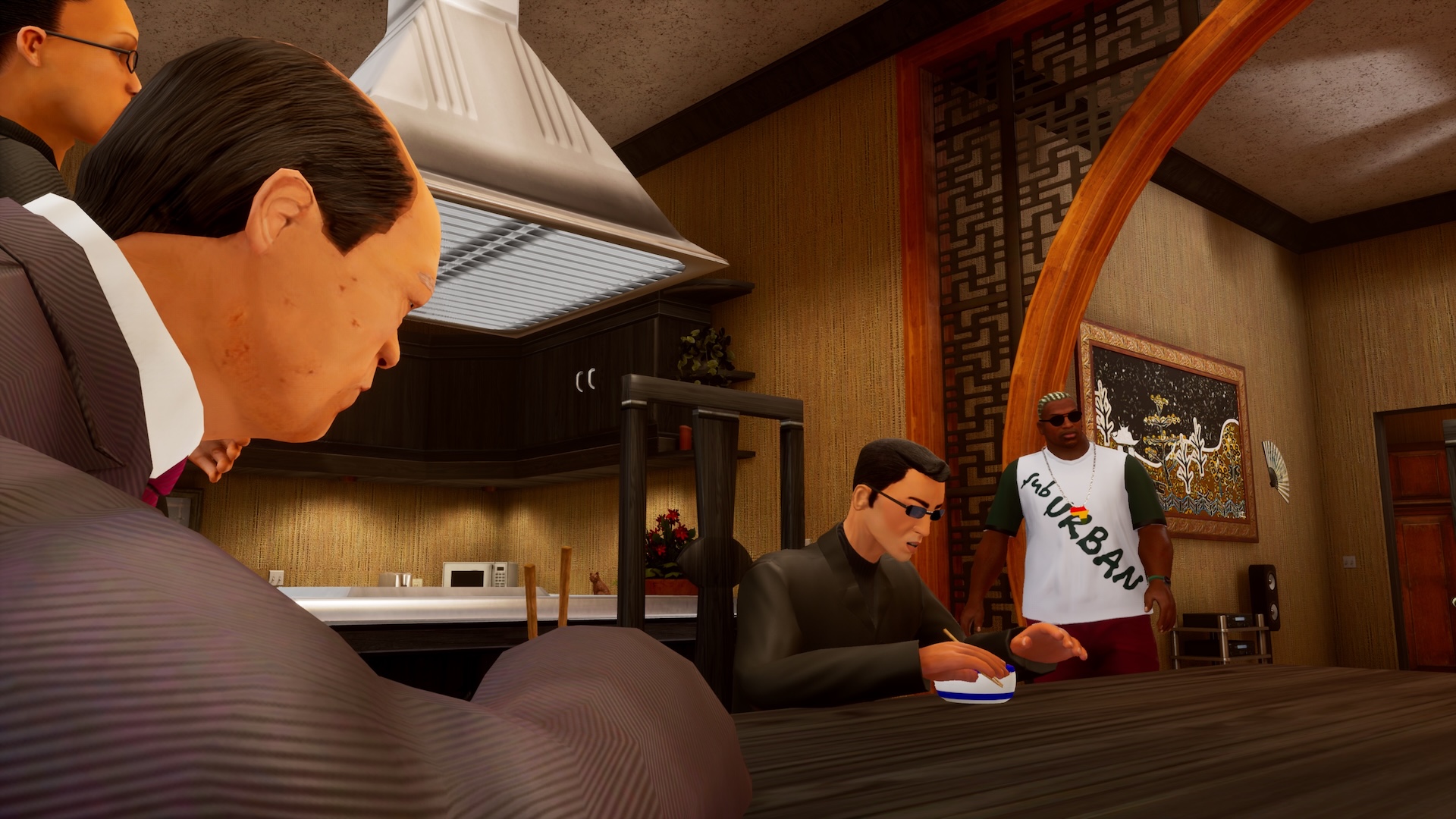
The San Fierro story largely revolves around the Triads, real estate, and undercover CIA-with-the-serial-numbers-filed-off crew. In that part of the game Carl ends up owning a car garage and doing a lot of street racing, which contrasts with the street fighting in Los Santos.
Then there’s Las Venturas, where Carl ends up co-owner of one of the biggest hotels on The Strip, and engaging in a massive heist involving helicopters.
By the time he returns to Los Santos, it almost feels quaint to be concerning himself with things like corrupt cops, his incarcerated brother, and street gangs again. The game manages to make this work, however, by escalating the ending act in another way - their own fictionalised version of the 1992 Los Angeles Riots.
Still, despite all this it’s a bit weird remembering how fractured the story is. In another universe, you can imagine a world where GTA San Andreas was either three games or told its three major stories with three different protagonists.
It’s easy to imagine that the idea of a story with three different characters you can play in the one game began here, before finally happening properly 9 years later in GTA V.
A final thought on the story: it’s sufficiently complex, with so many different threads, that Rockstar released a 21 minute long prelude short film - one which is genuinely interesting to watch.
Characters
Something the “3D” generation of GTA games has never been short of is rich and amusingly written characters, and San Andreas may be where that peaked - though mostly in the first two acts.
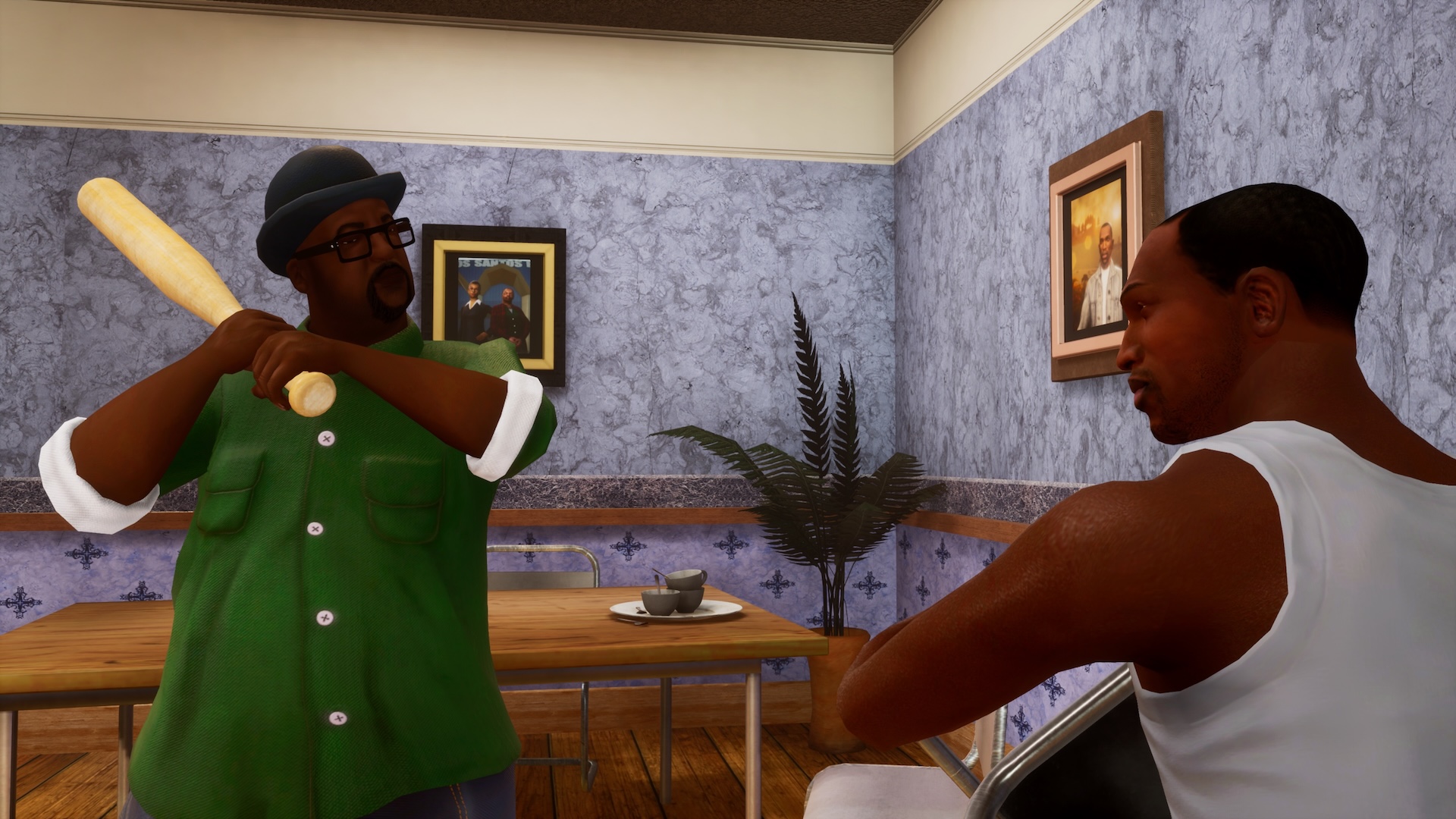
Smoke, Ryder, Cesar, Officer Tenpenny, the ageing hippy conspiracist The Truth, crooked CIA-guy Mike Toreno and the blind Triad boss Wu Zi Mu are as memorable as any of the san-baked weirdos from Vice City.
CJ is an interesting character too, managing to walk the line between believable young man given a shit hand in life and witty and strong-willed character who believe making his way up in the bizarre fun-mirror world of Grand Theft Auto.
The thing is though, everything feels just a step back from the parody of Vice City. As good as these characters are, they’re never quite as memorable as the chainsaw-wielding drug lords and coke-addled lawyers of Vice City.
I think this is partly because Vice City’s characters are often overt parodies of film and TV characters. Ken Rosenberg is essentially Sean Penn’s character from Carlito’s Way with the comedy dialled up to 11, Lance Vance is a paranoid parody of the actor’s character, Tubbs, from Miami Vice, and most every other character has their roots in film or TV characters too.
By contrast, the filmic inspirations for San Andreas’ characters feel a bit less obvious. As much as the Los Santos chapters of the story riff on tropes from films like Boyz N The Hood and Menace II Society, their characters are very much more their own.
It gives the story and world of San Andreas a more unique feel, and them being taken down a rung or two from absolute parody is required to make the story work.
(Okay, except Catalina, who is almost jarringly out of place.)
The City and the The City and The City
Cities, plural. That’s the main thing with with San Andreas. Where every other 3D GTA game focuses on a single city and its surrounds, San Andreas gives us en embarrassment of urban riches, each distinctly its own digital facsimile of a real place.
It’s a thing that we’ll probably never see again, as big games, especially from Rockstar, get grander and more polished, with just a single city and some of its adjacent settlements seemingly the most we’re going to get going forward. Even Red Dead 2 is really only one city, even if the bulk of its map is the wilderness.
The simple fact is, though, that most people do not finish video games they start, and we game designers tend to recognise this, as frustrating as it can be. This means that especially when you’ve got upper management breathing down your neck, the focus on perfecting the game tends to be on the early stages of any game. This shows, if only a little, in San Andreas.
Each city feels just a bit less fleshed out and a bit more barren than the last. There’s more to do and more distinctive characters in Los Santos than in Las Venturas.
Despite that, though, I found myself more drawn to Las Venturas than any other city in the GTA world outside of Vice City. (GTA VI as soon as possible, please.)
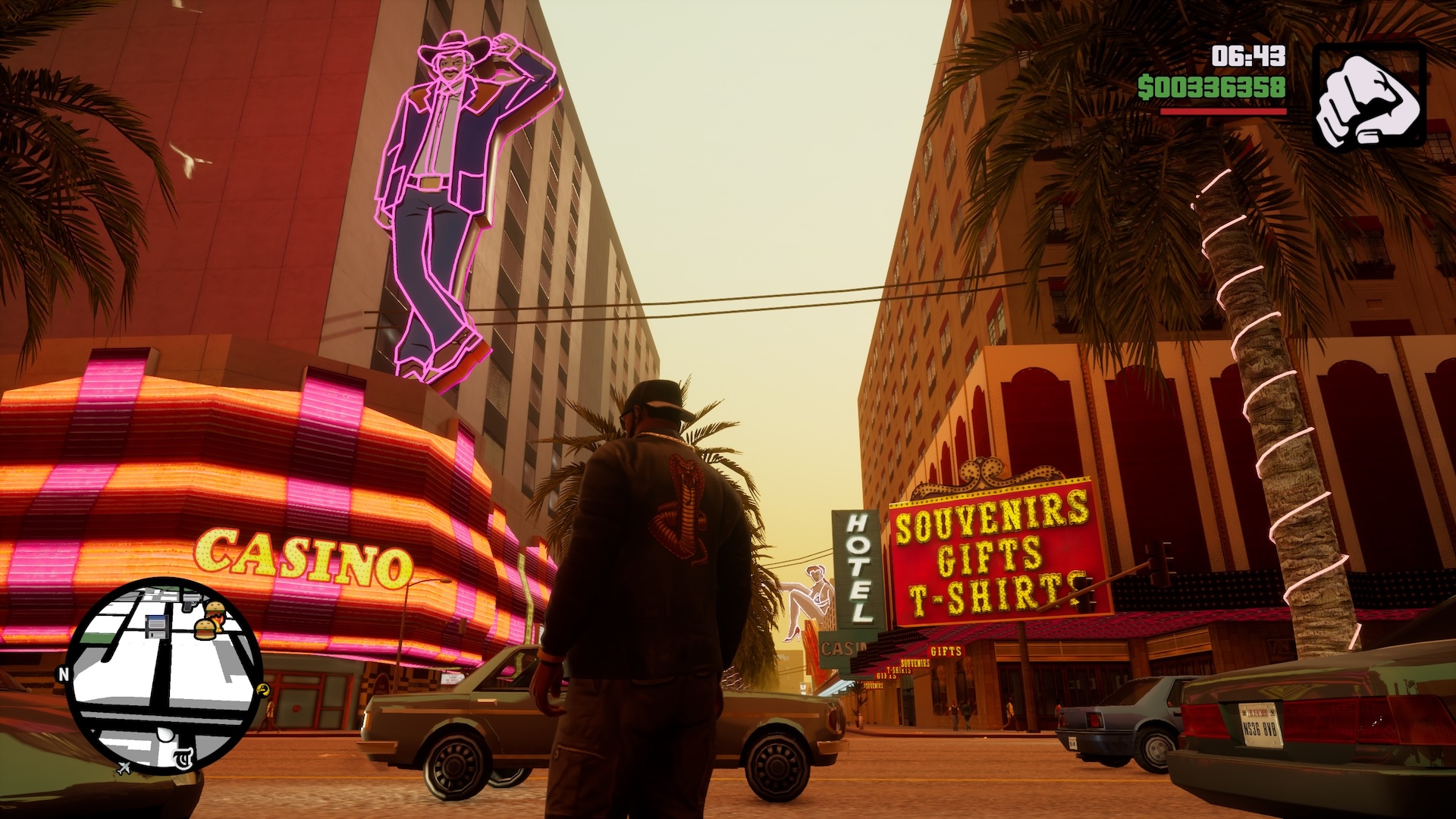
For whatever reason, despite having a slightly weaker set of new characters and places to hang out than preceding cities, there’s something about the neon depravity of their Las Vegas stand-in that made me want to chill there more often than any other place.
Of course, that may just be a result of me being one of the heathens who thinks Casino is better than Goodfellas.
Cars
The 21st century entries in the Grand Theft Auto series has seen a slow shift from cars being flimsy things which catch on fire if you merely scrape past a fence post, to heavy vehicles with arcady but honest handling which even react correctly when you put a bullet hole in their gas tank to empty it out.
San Andreas is an interesting sweet spot for the “3D” series. In GTA III cars are flimsy to the point of frustration. In Vice City the cars can take a bit more of a beating, but they’re still wont to explode so quickly that which car you choose to drive is usually pretty academic - it won’t be around for long.
With San Andreas that’s still true, but with a bit of care you can still keep cars alive long enough to almost feel worth keeping one or two that you really like at your safehouses for when you aren’t off doing dangerous missions.
This is the first game in the series to let you perform customisations to certain types of cars, personalising them to whatever you think CJ should be driving, so that feeling is pretty important. by the end of the game, I had a suitable sports car to drive around the LV strip, an imported race car or two in SF, and some low-riders to cruise the streets of LS.
The car handling is also improved, meaning that this is the first game in the series where choosing to just drive around or engage in street races is fun in its own right.
Money
In GTA III, money was essentially a high score, a holdover from its 2D predecessors where that was literally true. You still needed to spend money on weapons, but after a certain point in the game that really didn’t matter much.
Vice City is a weird one because it’s almost the only game in the series where how much money you have gates your progress through the story. Its progression hinges on you earning enough money to buy more properties, giving the acquisition of wealth a tangible sense of in-game value.
San Andreas backtracks on this in a way - you can still buy properties (mostly safe houses) but the focus on owning property and getting more money from that is largely gone. That’s not a huge complaint. It would have felt a little out of place in the story. CJ never set out to become a rich businessman owner or a crime boss, unlike Tommy.
Almost none of the purchasable businesses in San Andreas are required for progression of the game - and most properties involved in that narrative progression are given to you in cut scenes, with one notable exception being the Verdant Meadows airstrip in the desert outside Las Venturas, and by that point if you don’t have the $80k required, it’d be a bit surprising. (Unless maybe you spent it all on safehouses, clothes and horse races, like my CJ. Oops.)
There’s more ways to earn money in San Andreas, too, beyond just the odd property. There’s even functional casinos, from hole in the wall gambling pads in Los Santos to full casinos in Las Venturas.
Things to Do in San Andreas When You’re Dead
More than just ways to make money, San Andreas is also probably the most full-featured GTA game in terms of its massive variety of things to do. From parachuting to gambling to racing to lowrider quick-time rhythm games to dating (more on that next), San Andreas feels like the game you can most easily lose yourself for huge chunks of time doing nothing but side content.
Even the clothing system is now full of customisation. Where Vice City merely let you don new clothes from pick-up points at various safe houses and shops (all for free), you can go to various shops and customise precisely what CJ is wearing.
On this play through I frequently decided to stop what I was doing on the main quests and saving up enough to buy a certain safe house or the like, or just enjoying the new city I found myself in.
I kept CJ dressed in a way that felt right given what he was doing and what his life situation was - dressing the part when he was an LS street hood, a Fast & The Furious style racer in SF, or a casino-owner on the Venturas strip.
It’s not that I needed to, but taking the time to decide where CJ would be staying (a fancy apartment in the Queens district or a bachelor pad in Doherty?) and what car he’d be driving most of the time felt important.
Dating
San Andreas introduces the first of a series of ‘dating’ minigames and… it’s a bit dubious. Gamifying romance in games rarely feels anything but clumsy, and given you’re often playing as men dating women, they almost always come across as a bit sexist, even in modern games.
San Andreas is no exception here, especially as the main reason to date is that you get certain perks for being in the good graces of various girlfriends.
I don’t have much more to say than that here, but I figured it was worth saying - dating in games is often bad, and it’s especially bad here.
Fire and Forget Mechanics
Further feeding into the “it’s actually three different stories/games” theory is the fact that San Andreas has whole systems that come and go.
The final part of the first act introduces Gang Wars, a game mechanic where which areas your gang controls are shown on the map and it’s up to you to take new ones and protect old ones, until (ideally) you ‘own’ the whole town.
But once you move on from Los Santos, that entire mechanic just vanishes until you return to the city much later on.
It’s not a huge problem, but it definitely feels a bit strange. You go to all the trouble of learning a new mechanic in the game, only for it never to turn up again.
(Other GTA games do this, but it’s usually single-use mechanics in individual missions, such as the train or crane driving minigames in GTA V.)
Final Thoughts
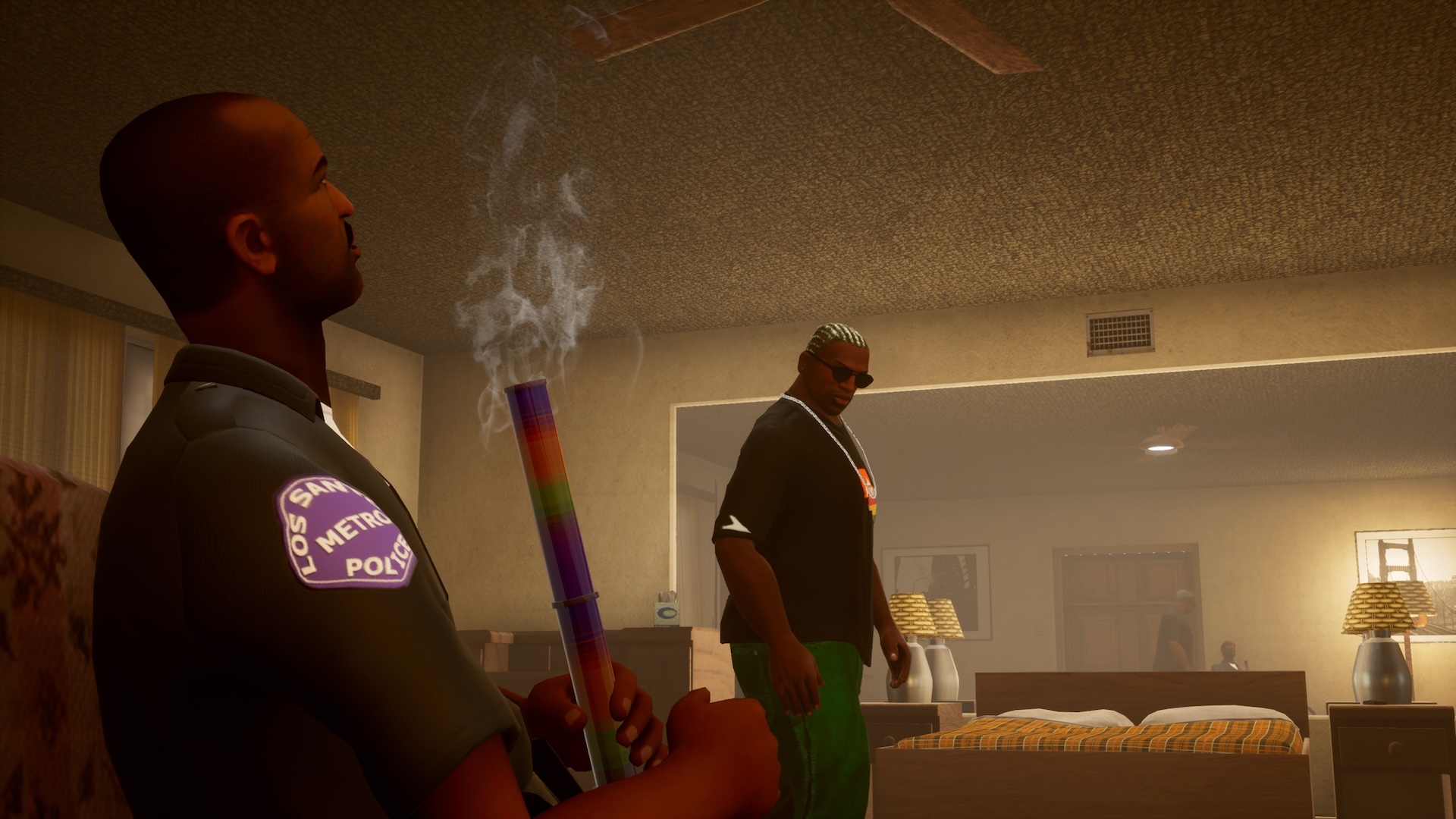
When it comes down to it, there’s a reason San Andreas is very much a high watermark for the series in many ways. Certain things it does will never be done better after this, but in the same way things will never seem quite so extreme - including the stark contrast between the game’s most grounded elements and the most silly.
That CJ is the same character who is distraught over the death of his mother and escaping from the game’s Area 51 stand-in using a jetpack is just a thing you have to accept.
In future games, a feel would be more strongly kept to - the grit of GTA IV is as heavy as it gets in San Andreas, and the over the top violence and insanity of GTA V (and GTA Online) matches that of San Andreas too, but never again in a single title.
The property ownership and non-linear way that plays out in Vice City makes the game sometimes lurch from one level of difficulty to another (something San Andreas doesn’t really have) but its lack also means that you feel like you have less control over CJ’s story than Tommy’s.
Part of me feels like my perfect GTA game would be one which married these two concepts - the gameplay quality of San Andreas, and the non-linear property ownership of Vice City.
And you know what? That game almost exists.
Both of these exist in Vice City Stories, but it ends up so busy for it that part of me wishes for a more ‘pure’ version of these games.
A Los Santos game that’s nothing but the first and last acts of San Andreas, with a heavy focus on the mechanics and social aspects of the gang warfare.
A San Fierro game that’s all racing.
A Las Venturas game that’s all heists and property ownership.
As good as San Andreas and the other hugely expansive GTA games get to be, there’d be real value and trimming them back to what they do best, whatever that is for each game.